


Yoga for Beginners in Wokingham: Everything You Need to Know Before Your First Class
Updated: Jun 17
Thinking About Trying Yoga? Start Here.
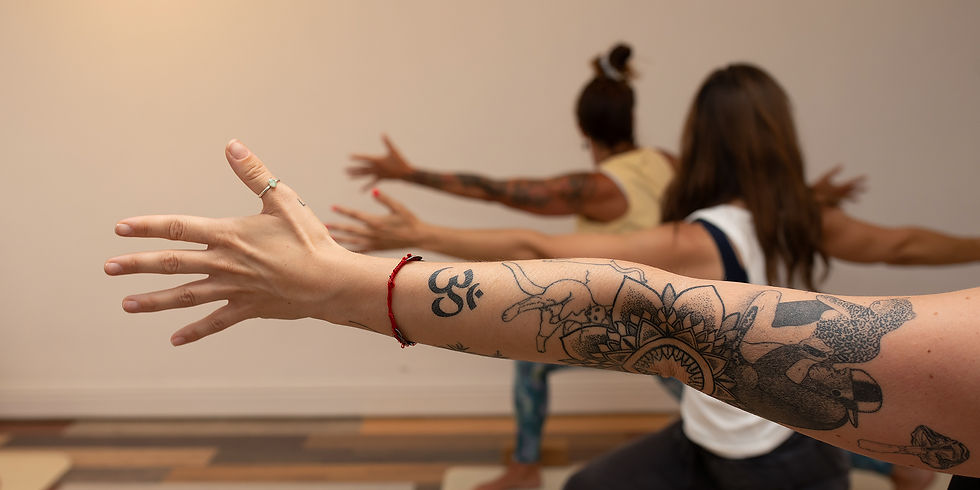
Walking into your first yoga class can feel surprisingly daunting.
Not because yoga itself is particularly complicated, but because most of us carry a few assumptions about what yoga is supposed to look like.
Perhaps you imagine a room full of very flexible people effortlessly tying themselves into knots. Perhaps you worry you'll be the only beginner. Perhaps you're wondering whether you'll be expected to know the names of poses, sit cross-legged for an hour, or touch your toes.
The good news?
None of those things are required.
Yoga Was Never About Being Flexible
One of the most common reasons people delay trying yoga is because they don't feel flexible enough.
Yet flexibility has never been the goal of yoga.
In the Yoga Sutras, one of the foundational texts of yoga, Patanjali describes posture simply as sthira sukham asanam - a posture that is steady and comfortable.
Not impressive.
Not advanced.
Not perfect.
Steady and comfortable.
The purpose of physical practice is not to force the body into shapes, but to create a greater sense of ease, awareness, and connection.
Some people arrive at their first class able to place their hands flat on the floor. Others can't touch their knees. Both are welcome.
You Don't Need Any Experience
Every experienced yogi was once a complete beginner.
Nobody arrives knowing all the poses.
Nobody remembers every instruction.
Nobody gets everything "right".
In fact, one of the most valuable things yoga offers is the opportunity to step away from the idea that we must be good at something before we begin.
You simply show up.
The practice unfolds from there.
What Actually Happens In a Beginner-Friendly Yoga Class?
Every teacher has their own style, but a typical class might include:
Gentle movement to warm the body
Simple breathing practices
Standing and seated postures
Options to make poses more accessible or more challenging
A period of relaxation at the end
You won't be expected to keep up with anyone else.
You won't be asked to perform.
And despite what many people fear, there is usually far less pressure than a typical gym class.
Yoga is, at its heart, a practice of paying attention.
What Should I Wear?
Comfortable clothing that allows you to move freely.
That's really it.
You don't need special yoga outfits, expensive leggings, or matching sets.
A t-shirt and comfortable trousers or leggings are absolutely fine.
Most people practise barefoot.
What If I'm Nervous?
That's completely normal.
Many people who now feel entirely at home in the studio tell us they sat in their car for ten minutes before their first class, wondering whether to come in, or thought about booking a class for months before they plucked up the courage to commit. I, myself, practiced at home for months and months, learning from books and videos, before I felt brave enough to join a class and honestly, attending that first class changed not just my practice, but my life!
Trying something new can feel vulnerable.
The important thing to remember is that nobody else is judging your practice.
Most people are far too busy focusing on their own balance, breath, and wandering thoughts.
Finding the Right Class
Not all yoga classes are the same.
Some are stronger and more energetic.
Others are slower, more meditative, or deeply restful.
The best place to begin is often not the "hardest" class, but the class that feels most approachable.
At Sarvāṅga, we offer a range of practices including Hatha Yoga, Flow, Yin, Restore, Meditation, Qigong, and Yoga Nidra. If you're unsure where to start, we're always happy to help guide you toward a class that feels like a good fit.
A Final Thought
There is a lovely saying that the hardest pose in yoga is simply arriving on your mat. For many people, that first class is the biggest step. After that, something shifts.
You realise nobody expected you to be flexible. Nobody expected you to be experienced.
Nobody expected you to be anything other than exactly as you are.
If you've been thinking about trying yoga for a while, perhaps this is your invitation to stop waiting until you're fitter, calmer, stronger, more flexible, or more confident.
Yoga isn't something we earn the right to do once we've changed. It's a practice that supports us while we're changing, growing and living our everyday lives. And every practice begins in exactly the same place: With a first breath.
Frequently Asked Questions
Can beginners do yoga?
Absolutely.
Many of our students arrive having never attended a yoga class before. You don't need to be flexible, fit, strong, spiritual, or know the names of any poses. A beginner is simply someone who is beginning, and everyone starts somewhere.
If you're unsure which class might suit you best, we're always happy to help.
What is the best yoga class for beginners?
There isn't one perfect answer, as it depends on what you're looking for.
If you'd like to build confidence with the foundations of yoga, our Slow Flow Yoga or Flow and Restore is often a wonderful place to start. If you're seeking relaxation and stress relief, Restore, Yin, Meditation, or Yoga Nidra may feel more approachable. If you enjoy movement and would like a little more energy, Flow could be a good fit.
The most important thing is finding a class you'll enjoy enough to return to.
What should I bring to a yoga class?
Just yourself and some comfortable clothes you can move in.
At Sarvāṅga, mats and props are provided, although you're very welcome to bring your own mat if you prefer. Most people practise barefoot, and we recommend arriving a few minutes early so you can settle into the space.
How often should beginners practise yoga?
Once a week is a wonderful place to begin.
Consistency tends to be more helpful than intensity. A regular weekly class often creates more lasting benefits than attending several classes one week and then none for the next month.
Over time, many students naturally find themselves wanting to practise more often.
I'm not flexible. Will I struggle?
Not at all.
In fact, many people come to yoga because they feel stiff or tight.
Yoga helps develop flexibility over time, but flexibility is not a requirement for starting. Every posture can be adapted to suit different bodies, abilities, and levels of experience.
Do I need to be fit to start yoga?
No.
Yoga meets you where you are.
Some classes are physically stronger than others, but every practice begins with awareness of your own body and your own breath. You are always encouraged to work at a pace that feels appropriate for you.
Will everyone else know what they're doing?
Probably not.
Even in long-established classes, there are often people attending for the first time, returning after a break, recovering from injury, or trying a new style.
Yoga isn't about keeping up with the person on the mat next to you. It's about developing a relationship with your own practice.
What if I have an injury or health condition?
Please let your teacher know before class.
Most teachers can offer alternatives or modifications for common injuries and conditions. If you're unsure whether a class is suitable for you, get in touch before booking and we'll be happy to advise.
What happens at the end of a yoga class?
Most classes finish with a period of relaxation known as savasana.
This is a chance to rest, absorb the practice, and allow the body and mind to settle. For many students, it becomes their favourite part of the class.
Where can I find yoga classes in Wokingham?
Right here! We offer yoga classes in Wokingham, including Yoga for Beginners courses and workshops, and beginner friendly classes.
Do I need to book in advance?
We recommend booking in advance, particularly for evening classes, workshops, and special events, as spaces can be limited.
You can view our timetable and book online at any time.


Comments